Framework Fatigue: Are We Learning Too Many Tools?
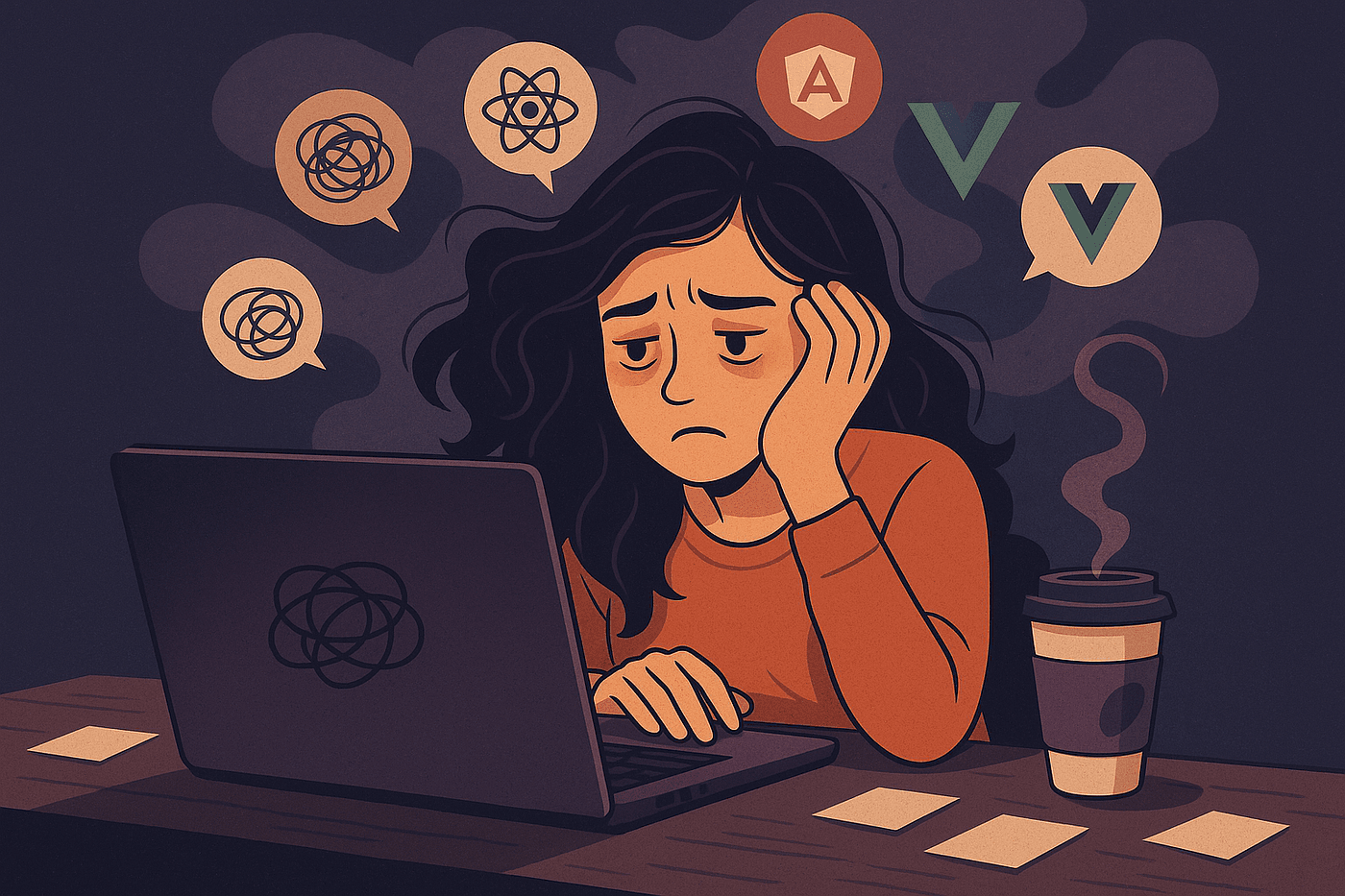
I have been thinking about this a lot lately. Are we actually building better apps, or are we just stuck in an endless loop of learning new tools?
The Problem Is Real
Framework fatigue is not just about being tired. It is about spending more time learning tools than actually building things.
You spend weeks learning React. Then someone says Next.js is the real move. You start learning it. Then Remix shows up. Meanwhile, your friend swears by Vue, someone else says Angular is the only serious choice, and Twitter is hyping some new thing every month.
It never stops.
The worst part is the feeling of always being behind. You finally get comfortable, and suddenly job posts are looking for the next big thing. Your hard earned skills start feeling outdated. That pressure to keep up never really leaves.
Why Does This Keep Happening?
The JavaScript world moves fast. Too fast sometimes.
Anyone can build a new tool and release it to the world. That leads to innovation, but it also floods us with choices.
Frontend changes are visible. When the UI changes, everybody sees it. So even small improvements get a lot of attention.
Social media makes everything urgent. One loud tweet can make it look like the whole world already switched.
So we feel like if we do not learn everything, we will be left behind.
But Here Is The Truth
A lot of companies are not using the newest frameworks. They are running stable apps built on React, Vue, or even older tech. And those apps do their job. They bring in money. They serve users every day.
The cutting edge stuff on Twitter is not what most of the industry is doing. Real businesses care more about shipping and keeping things working than chasing the next shiny trend.
A Quick Reality Check
I used to check job portals and freak out when I saw new frameworks in listings. But React and Angular still appear everywhere. Even if demand shifts a bit each year, the core skills stay valuable. Companies want people who can build and maintain products, not people who collect frameworks like Pokémon cards.
When Frameworks Actually Make Sense
Frameworks are not the villain. They solve real problems like:
• Keeping code organized in large apps
• Helping teams follow the same patterns
• Making it easier to maintain features over time
• Handling performance issues and edge cases we should not reinvent
The problem starts when we jump without thinking. Not every project needs the newest thing.
I Saw The Cost Up Close
A friend of mine kept switching stacks every few months. Svelte in January, Solid in April, Qwik in July. He knew a lot of surface level stuff but barely finished any side project. Employers were confused about what he was actually good at. He burnt himself out and stopped building altogether for a while.
That is what constant switching does.
What Actually Matters
Framework fatigue happens because we think we must know everything. We do not.
What really matters is the foundation. How JavaScript works. How the browser works. How the DOM works. These things stay the same even when the tools change.
Once you get the basics, picking up new tools becomes way easier. Every modern framework uses components. Every framework manages state. Every framework handles events. The ideas are not new. Only the style changes.
The best developers are not the ones who know every framework. They are the ones who can solve problems and make the right choices.
How To Deal With It
Here is what has worked for me.
Pick one framework and go deep. Do not jump around every week.
Give new frameworks time to prove themselves. If they are still alive and growing after a few years, then maybe they are worth learning.
Focus on fundamentals. Read about architecture and design patterns. That knowledge lasts longer than any trend.
Set limits. Maybe explore new things once a week or once a month. The rest of the time, build stuff with what you already know.
And honestly, it is fine to ignore most new tools. Not everything deserves your attention. A lot of trends disappear before anyone puts them into production.
The Real Cost
Switching frameworks nonstop wastes time. Old projects get abandoned. Code gets rewritten for no real reason. It feels like progress but it is actually just spinning in circles.
Hiring also gets harder. If companies use niche stacks, fewer people can join easily. More training, more confusion.
And for us developers, it hits our confidence. Skills feel like they expire. That leads to burnout. Some people even leave the field because they think they cannot keep up.
My Take
Framework fatigue is optional.
We make it worse when we chase trends instead of solving problems. The web did not get more complex on its own. We layered that complexity on top.
HTML, CSS, and JavaScript still work. You can still build real things with them.
Frameworks will keep coming and going. But the ability to think clearly and build useful things will always matter.
Learn tools when they solve a real need in your work or your projects. Not because they are trending.
Keep building. Keep learning the fundamentals. Keep leveling up where it counts.
You do not need to know every tool out there. You just need to build things that matter.